AI
AI in Social Media Marketing - 7 Practical Ways for Small Businesses
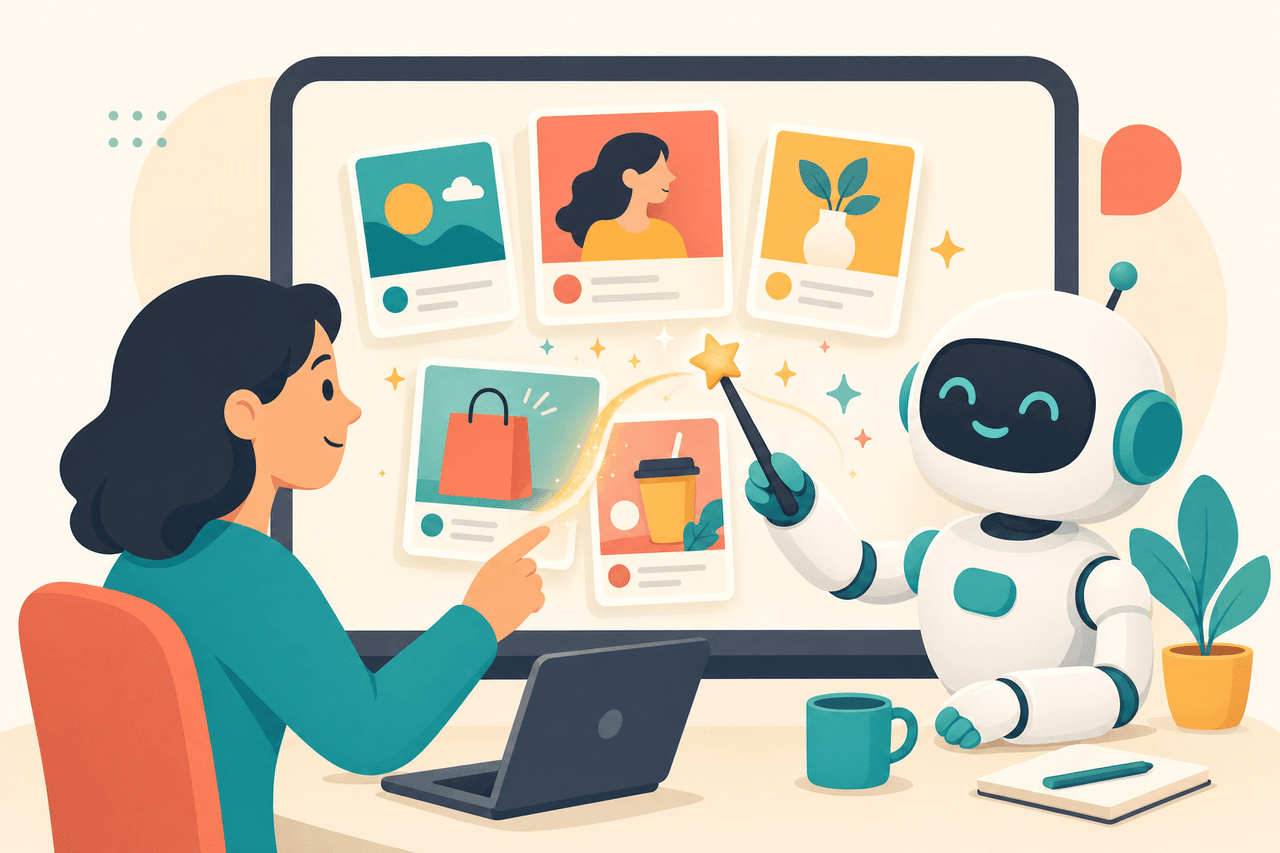
AI has rolled into marketing tools at speed. The hype is loud, the promises are big, and many small business owners are left wondering whether this is something they should actually adopt. The short answer is yes, but only through practice.
According to SBE Council's 2026 survey, 82% of small businesses have already invested in AI tools, and marketing is the most common use case. AI does not replace the marketer, but it saves hours each week. Here are seven ways it helps with social media marketing right now, without forcing you to change your entire workflow.
1. Ideation for an empty week
An empty content calendar is the most common reason posting stalls. AI quickly produces ten topic options for the week, if you tell it your industry, audience, and what you want to talk about. You do not have to take the suggestions as-is, but you get starting points that are easy to shape.
2. Captions that do not sound like a robot
Captions are the most labor-intensive part of many posts. AI drafts them, and you spend five minutes making them sound like you. The key is to give the tool examples of your own voice. Otherwise the result is generic English jargon translated awkwardly.
Remember
Always read through every suggestion before publishing.
3. Adapting the same content for each platform
The same message rarely works as-is on both Instagram and TikTok. AI reshapes a longer Facebook post into a tight X update or a punchy Instagram caption in seconds. This is one of the biggest time savings: one idea becomes several posts across platforms.
4. Keeping the brand voice consistent
Generic AI text is easy to spot: superlatives, hollow enthusiasm, the same predictable rhythm. A good tool lets you define a brand voice: tone, words to avoid, level of formality. Once those are set, you can reuse the same profile every time.
5. Analytics in plain language
Raw insights data from social accounts does not tell a small business owner much. AI summarizes the numbers: which posts performed, which time of week brought reach, which content type drove comments.
It won't hand you the answers, but it shows you where to start.
6. Hashtag and keyword suggestions
Finding the right hashtags is dull, repetitive work. AI suggests tags appropriate for your industry and topic in seconds, including smaller local tags that often outperform mainstream ones.
Sanity-check the list. AI sometimes hallucinates tags that nobody uses.
7. Scheduling and best-time estimates
Best posting times should not be guessed. AI reads your account's history and suggests when your audience is most active. Combined with scheduling ahead, this means you never sit at 6:35 PM debating whether to post now. It is already done.
Summary
AI is not a magic trick. It is an assistant that saves time on repetitive work: ideation, captions, platform variants, and analytics. The savings are real. HubSpot reports that marketers using AI save around three hours per piece of content. Start with one use case, build it into your weekly routine, and add the next only when the first one sticks.
Steadybeat has AI ideation built in. It suggests topics, drafts the post, and adapts it for every platform. You decide what goes live.
Steadybeat, a social media tool where AI is part of the daily routine.
Sources
Verified in August 2026.
- SBE Council: Small Business Tech Use Survey 2026. 82% of small businesses have invested in AI tools. The survey is US-based, so the figure for Finland may differ.
- HubSpot: The AI Trends for Marketers Report. Roughly three hours saved per piece of content.
- Sprout Social, The Sprout Social Index. AI use on social.
Read also
Instagram analytics: what the numbers mean and what counts as good in 2026
Views replaced impressions, the median engagement rate is 0.30%, and Instagram only keeps 90 days of data. The metrics that matter for a small business.
Do You Have to Label AI Images on Social Media? What the AI Act Requires
The EU AI Act's transparency obligations started applying on 2 August 2026. Here is what they ask of a small business publishing AI-made content on social media.
Social Media Content Calendar 2026 - Template and AI-Powered Weekly Plan
A ready-made weekly template, posting frequencies by platform, and how AI handles the rough draft. No more blank-calendar panic.