Algorithms
How the LinkedIn Algorithm Really Works in 2026 (And What's Just Guesswork)
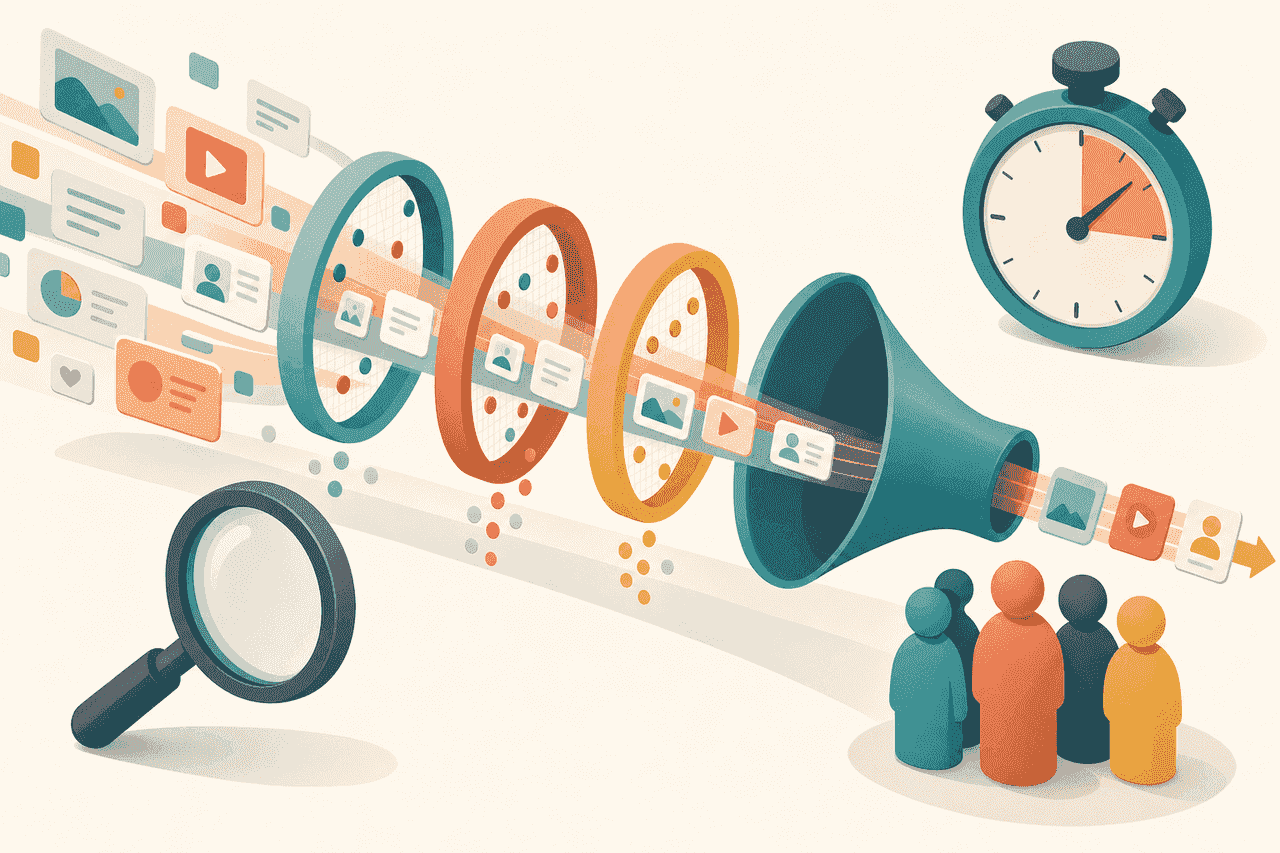
Search "LinkedIn algorithm" and you'll find hundreds of tip lists that claim to know exactly how reach is decided. Post at exactly 8am. Use three hashtags. Never put a link in the post itself. The problem is that most of this advice is guesswork dressed up as fact.
Few people realize LinkedIn tells you part of it directly. Its engineering team publishes, on its own blog, which signals rank the feed and how the machine-learning models are built. It's the best platform source in this set, because it's written by engineers for engineers rather than as marketing. It's still LinkedIn's own account of its own product.
Let's take four things one at a time: what LinkedIn itself claims, what it leaves unsaid, what outside data suggests, and what's just social-media folklore.
What LinkedIn says about itself
These aren't tip-list guesses. They're LinkedIn's own publications on its engineering blog.
Dwell time is an official ranking signal. LinkedIn measures two things. The first is time on the feed: measurement starts when at least half of a post is visible on screen as you scroll. The second is time after the click, meaning how long you stay with the content once you open it. The reasoning, in the platform's own words, is that a click is a noisy signal. Someone can click an article, realize within seconds it isn't relevant, and bounce back to the feed. LinkedIn calls these "click bounces." That's why a P(skip) model runs behind the feed, predicting the probability that you'll skip a post — and lowering that post's score accordingly.
The practical consequence matters: a post someone actually stops to read beats a post that collects fast likes.
The feed doesn't judge posts one at a time. LinkedIn moved to an architecture where retrieval runs on embeddings generated by a language model, and ranking is done by a model that reads over a thousand of your past interactions as a sequence. It isn't just looking at this one post — it's looking at your whole history of what has stopped you before. The model predicts both passive actions (click, skip, long dwell) and active ones (like, comment, share).
LinkedIn has made a deliberate editorial choice. The platform has said it prioritizes "knowledge sharing and professional conversations" over motivational posts and humble-brags. Content from your own network is shown first, and the model reads your profile to judge which topics you're an expert in and boosts content in those areas. The feed's goal, in LinkedIn's words, is content that is timely, relevant to a member's professional goals, and grounded in trust.
Why this matters
Everything above comes from LinkedIn itself. It won't be outdated next month, because it describes what the algorithm is trying to do, not this week's specific tuning. What the blog leaves out is worth thinking about separately.
What LinkedIn doesn't tell you
Architecture yes, weights no. The engineering blog is unusually precise about how the model is built: embeddings, sequence models, P(skip). It gives you no number at all for how much a comment counts against a like. Which is exactly why every exact multiplier you see in a tip list is an outside estimate.
The reach decline goes unmentioned. LinkedIn writes readily about the feed getting better. It has published nothing about organic reach collapsing over the same period. That information is only available from outside measurements, and the gap is wide: the platform reports improving relevance while the user sees impressions falling.
Company Pages aren't addressed separately. The blog describes the feed in general. How a company page update fares against a personal profile update isn't covered, even though that's the most relevant question a small business has.
What the data suggests
The next tier is weaker than official sources but stronger than a guess. Consultant Richard van der Blom's 2025 report analyzed roughly 1.8 million posts. It's an outside measurement, not a truth confirmed by LinkedIn. It's also worth knowing that the author sells LinkedIn coaching, so he has an interest in the platform looking difficult and advice looking necessary. The data set is still large, and it lines up with what the platform says about its signals.
What the report has published for free says 72 percent read LinkedIn on a phone, and that you have 1.3 seconds to stop them. The thirty-to-sixty-minute window that supposedly decides whether a post spreads is attributed to the same report, but it isn't in the free material, so treat it as second-hand. Comments outweigh likes, and the biggest reach boost comes from a comment thread with genuine back-and-forth. There's a clear link between dwell time and engagement: posts skipped quickly stay marginal, posts read at length spread. Video and polls overperform other formats.
The same data has an uncomfortable side, and the numbers are stark: impressions fell 50% year over year, engagement 25%, and follower growth 59%. LinkedIn says nothing about any of this in its own publications. That isn't an excuse for weak content. It's a reason to focus on the signals you can't fake, and a reason not to measure your success in impressions, which are falling regardless of what you do.
What's just guesswork
This is where many tip lists go off the rails.
"A comment is worth exactly 15 likes." Precise multipliers like this are outside estimates, not numbers LinkedIn publishes. The direction is right, since a comment does weigh more. The exact figure is still invented.
"Post at exactly 8am on a weekday or you've missed it." Timing matters as a window, not a magic minute. Because the first 30–60 minutes decide reach, post when your network is awake. Fixating on one clock time is a red herring.
"Hashtags decide your reach." The documented effect is small. A few relevant tags won't hurt, but they aren't the lever that makes a post fly.
"External links are always punished." This is an exaggeration. The model cares whether you skip a post and how long you stay — not a mechanical link ban. A link that sends a reader away in a second shows up as poor dwell time. Content that holds attention does fine with or without one.
What the algorithm actually rewards
Set the guesswork aside, and LinkedIn's own publications plus the outside data point to a few durable principles. They'll still hold next year, because they follow from how the model is built, not from this month's adjustment.
- Relevance beats volume. The model predicts whether you'll skip a post. If your content stops the scroll and the reader stays, that's exactly what the
P(skip)model wants to see. - Conversation beats reaction. A comment and a real exchange are strong signals because they're hard to fake and they show the content was genuinely worth it.
- Your network is the starting line. Reach begins with the people who know you. Their engagement opens the door to a wider audience.
- Consistency compounds. When you post regularly in your area of expertise, the model learns what you're known for and boosts your content.
How a small business does this without a marketing team
Knowing this isn't the bottleneck for a small business. Applying it week after week, with no dedicated person, is.
- Write so the post gets read to the end. A strong first line, no click-out to another site, content posted straight to LinkedIn.
- Ask a real question and reply to comments within the first hour. Conversation is a signal you can't get passively.
- Post regularly in your field. Cadence matters more than the perfect clock time.
- Drop the hacks you can't verify. The durable signals are precisely the ones you can't game.
The hardest of these is the last one, steady cadence. A single sharp post comes easily on a good day. Week after week of expert content, month after month, in between client work and invoicing, is where most small businesses' LinkedIn quietly fades. Daily posting still isn't the goal. The reasoning is here: how often you should post on social media.
That's what Steadybeat is for: you write and schedule a week of posts in one sitting and publish them to LinkedIn and your other channels from the same view. The algorithm's logic only pays off once you can act on it too.
Keep the cadence without a marketing team
Write, schedule, and publish to every channel from one place. Try Steadybeat
Sources
Verified in August 2026. The algorithm changes, so it's worth checking the platform's own points against the original source.
Platform sources (LinkedIn describing its own product):
- LinkedIn Engineering: Understanding dwell time to improve LinkedIn feed ranking
- LinkedIn Engineering: Engineering the next generation of LinkedIn's Feed
Outside measurements (not confirmed by LinkedIn):
- Richard van der Blom, Algorithm Insights Report 2025. Roughly 1.8 million posts. The author sells LinkedIn coaching; read the figures with that in mind. The link goes to the report's public announcement, which gives the data set size and the reach decline. The engagement and follower-growth figures and the 30–60 minute window are not in it; they come from sources summarizing the full report.
Read also
How the Instagram Algorithm Really Works in 2026 (And What's Just Guesswork)
Instagram head Adam Mosseri explains which signals rank content. We separated three things: what the platform itself claims, what outside data suggests, and what's pure guesswork.
How the Facebook Algorithm Really Works in 2026 (And What's Just Guesswork)
Meta's own Transparency Center explains how the Facebook feed ranks content. We separated three things: what Meta itself claims, what outside data suggests, and what's pure guesswork.
How the TikTok Algorithm Really Works in 2026 (And What's Just Guesswork)
TikTok's own newsroom explains how the For You feed recommends videos. We separated three things: what the platform itself claims, what outside data suggests, and what's pure guesswork.