Algorithms
How the TikTok Algorithm Really Works in 2026 (And What's Just Guesswork)
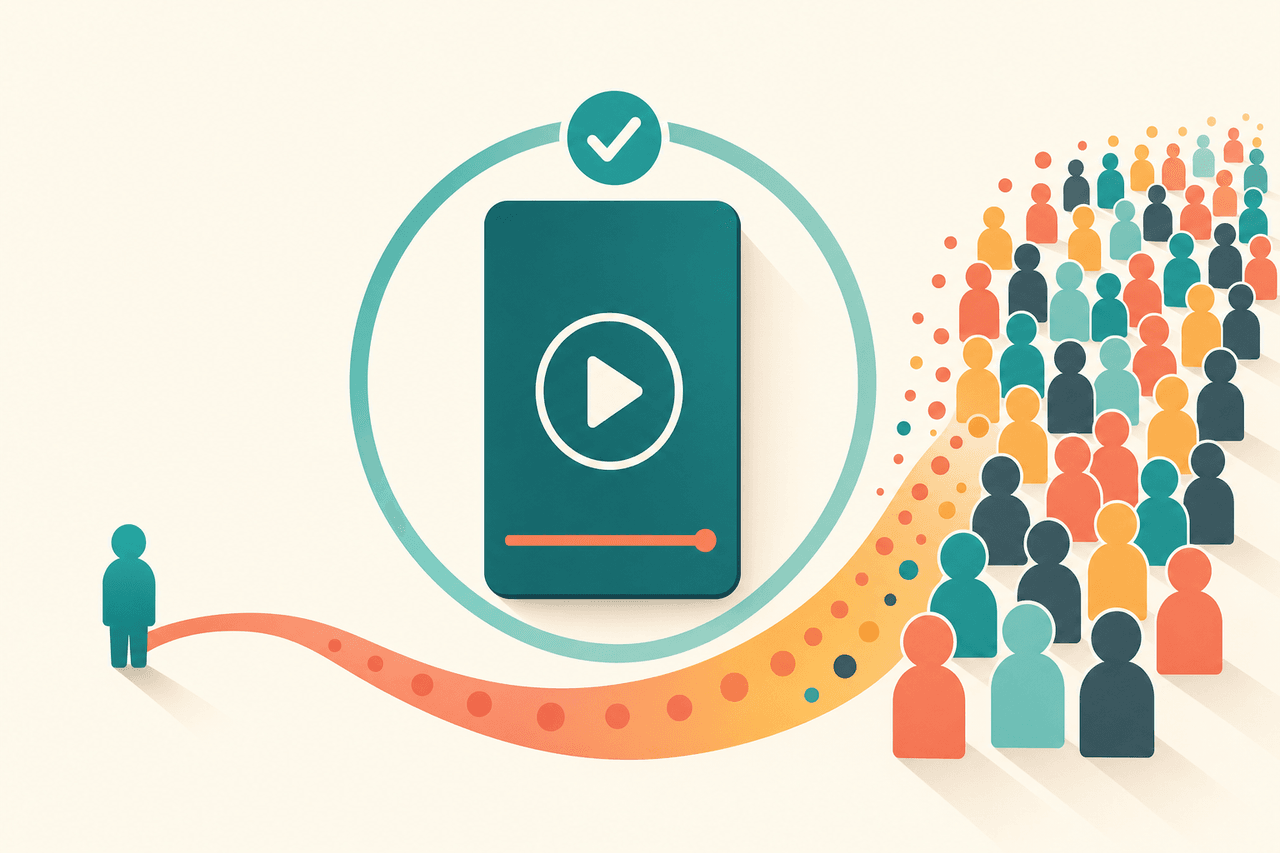
People talk about TikTok like a lottery: either you win and a video reaches millions, or you lose. The truth is less mysterious. TikTok describes how the For You feed works more clearly than most platforms, and it states one thing that changes the game for a small business. That description is still written by the platform itself, and it's the tidied-up version.
Let's take three things one at a time: what TikTok itself claims, what outside data suggests, and what's just social-media folklore.
What TikTok says about itself
These aren't tip-list guesses. They're TikTok's own positions, published in its newsroom. No better source exists. It's also exactly what the platform chooses to tell you about its product.
Follower count is not a recommendation factor. This is the single most important fact. TikTok says plainly that neither follower count nor whether an account has had previous high-performing videos is a direct factor in recommendations. Every video is evaluated on its own. A business with a hundred followers and an account with a million compete on the same terms for every single video. No other big platform works this way.
Recommendations rest on three things. TikTok names them: user interactions (what you like, share, who you follow, what you comment and create), video information (captions, sounds, hashtags), and device and account settings (weighted far lower).
Watch time is the strongest signal. TikTok says a strong indicator of interest — like finishing a longer video from beginning to end — carries more weight than a weak one, such as the viewer and creator being in the same country. Longer watch time signals compelling content.
The feed keeps variety. TikTok won't show two videos in a row made with the same sound or by the same creator. It's a deliberate choice to keep the feed varied.
Why this matters
Everything above comes from TikTok itself. It won't be outdated next month, because it describes what the algorithm is trying to do, not this week's specific tuning. Read the next section too. What TikTok leaves out is a big deal here.
What TikTok doesn't tell you
Some videos are pushed by hand. This is the biggest gap in the description. In 2023 Forbes reported, based on six sources and internal documents, that TikTok and ByteDance employees use a function called "heating": a specific video is manually pushed to a target number of views. According to an internal document, heating is used among other things to attract influencers and to sell partnerships. Heated videos account for roughly 1–2% of daily views.
The share is small, but it breaks the platform's headline claim. TikTok says every video competes on its own. Some don't compete; some are chosen. And you won't find this in the newsroom article everyone quotes.
The signals are named; the weights aren't. TikTok lists user interactions, video information, and device settings, but never says how much each one counts. "Watch time is the strongest signal" is a direction, not a measurable number.
Suppression gets a quieter voice. TikTok is happy to explain what lifts a video. What the platform holds back, and on what grounds, is described far more vaguely.
What the data suggests
The next tier is weaker than official sources but stronger than a guess. Outside measurements show how the numbers look in practice.
TikTok is still the engagement leader: Social Insider measures 3.73%, up 49% year over year, against Instagram's 0.48% and Facebook's 0.15%. On cadence, Dash Social's 2026 report finds that brands are posting a record eight times a week, but those posting fewer than six see 93% higher engagement. Intentional beats frequent.
On video length, though, there's a dated piece of advice worth dropping. For years the line was that short always wins. Buffer's analysis of 1.1 million clips says the opposite: videos over a minute collect 63.8% more watch time than 30–60 second ones, and longer clips also earn more reach. This doesn't contradict TikTok's own message, because the platform talks about completion rather than seconds. What matters is that the viewer stays, not that the video is short.
What's just guesswork
This is where many tip lists go off the rails.
"You need followers to go viral." Wrong, and TikTok says so itself. Every video competes on its own merits regardless of how many people follow you. This is a small business's best news: you don't need a ready audience, you need one good video. It isn't a completely blank slate, though, since some videos get pushed by hand.
"#fyp and #foryou push a video to the top." No. To TikTok, hashtags are just video information. Broad tags do nothing; a few relevant, descriptive tags help with categorization.
"Delete and repost if a video flops." Folklore. A repost resets nothing, because the next video is evaluated independently anyway.
"Post as often as possible." Frequency isn't a virtue in itself, and the data here is unusually clear: posting fewer than six times a week produces better engagement than eight.
"Keep every video under 15 seconds." Outdated. Measurements now show videos over a minute collecting more watch time. Make it as long as the subject holds, and not a second longer.
What the algorithm actually rewards
Set the guesswork aside, and the documented facts point to a few durable principles. They'll still hold next year, because they follow from how the system is built, not from this month's adjustment.
- Every video starts from an almost blank slate. No follower moat, no penalty for a past flop. That frees you to experiment.
- Watched to the end beats liked. Completion rate is the strongest quality signal. Hook right at the start, and let the subject set the length rather than the clock.
- A niche match beats broad appeal. TikTok is an interest graph, not a social graph. A relevant niche beats content aimed at everyone.
- Variety is built in. The same sound and the same creator don't get two slots in a row, so repetition can't buy visibility.
How a small business does this without a marketing team
Knowing this isn't the bottleneck for a small business. Applying it week after week, with no dedicated person, is.
- Put the hook in the first seconds and keep the video as tight as the subject allows. Completion decides it, not duration.
- Speak to a specific audience, not everyone. The interest graph rewards relevance.
- Don't worry about follower count. Every video competes on its own.
- Keep a steady cadence, but an intentional one. Fewer than six posts a week measures better than eight.
The hard one is that fourth point, steady cadence. Anyone can make one fun video on a good day. Keeping new, tight videos coming week after week, in between everything else, is where most people stall. The advice to post as often as possible doesn't hold up either. See how often you should post on social media.
Steadybeat is built for this: you make and schedule content in one go and publish the same thing to TikTok, Instagram, and other channels at once. When every video competes on its own, what matters is that they actually keep coming.
Keep the cadence without a marketing team
Write, schedule, and publish to every channel from one place. Try Steadybeat
Sources
Verified in August 2026. The algorithm changes, so it's worth checking the platform's own points against the original source.
Platform sources (TikTok describing its own product):
- TikTok Newsroom: How TikTok recommends videos #ForYou
- TikTok Support: How TikTok recommends content
Independent reporting:
- Forbes, TikTok's Secret 'Heating' Button Can Make Anyone Go Viral (2023). Six sources and internal documents; manually boosted videos are roughly 1–2% of daily views.
Outside measurements (not confirmed by TikTok):
- Social Insider, Social media benchmarks. 3.73% engagement, full-year 2025 data.
- Dash Social, TikTok benchmarks 2026. Under 6 posts a week, +93% engagement.
- Buffer, Longer TikToks get more views. 1.1M clips, March 2025.
Read also
How the Instagram Algorithm Really Works in 2026 (And What's Just Guesswork)
Instagram head Adam Mosseri explains which signals rank content. We separated three things: what the platform itself claims, what outside data suggests, and what's pure guesswork.
How the Facebook Algorithm Really Works in 2026 (And What's Just Guesswork)
Meta's own Transparency Center explains how the Facebook feed ranks content. We separated three things: what Meta itself claims, what outside data suggests, and what's pure guesswork.
How the LinkedIn Algorithm Really Works in 2026 (And What's Just Guesswork)
LinkedIn's own engineering blog explains how its feed ranks content. We separated four things: what the platform has documented, what it doesn't say, what the data suggests, and what's pure guesswork.